“And so it is that most people have no idea how beautiful the world is and how much magnificence is revealed in the tiniest things, in some flower, in a stone, in tree bark, or in a birch leaf. The grown-ups, going about their business and worries, and tormenting themselves with all kinds of details, gradually lose the perspective for these riches that children, when they are attentive and good, soon notice and love with their whole heart. And yet the greatest beauty would be achieved if everyone remained in this regard always like attentive and good children, simple and pious in sensitivities, and if people did not lose the capacity for taking pleasure as intensely in a birch leaf or a peacock’s feather or the wing of a hooded crow as in a mighty mountain or a splendid palace. What is small is not small in itself, just as that which is great is not—great. A great and eternal beauty passes through the whole world, and it is distributed fairly over that which is small and that which is large; for in such important and essential matters, no injustice is to be found on earth.” — Rainer Maria Rilke from a collection of his letters: Letters on Life (Thanks to Tim Ferriss for this quote)
One of my passions is to explore nature with a macro lens, to zoom in on the small details. Rilke puts words to my thoughts about the detail of nature; one reason why I keep learning biology is to understand to details as far down as I can.
Another favorite quote rattling around in my mind comes from the opening of the poem Auguries of Innocence by William Blake: “To see a World in a Grain of Sand And a Heaven in a Wild Flower Hold Infinity in the palm of your hand And Eternity in an hour”
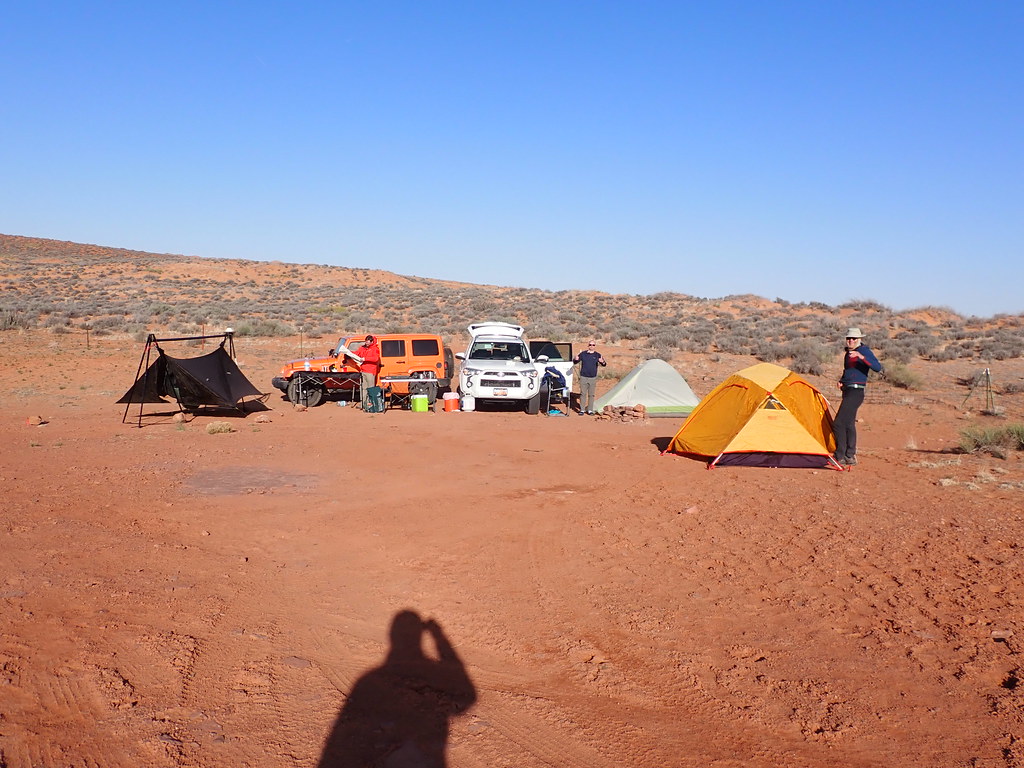
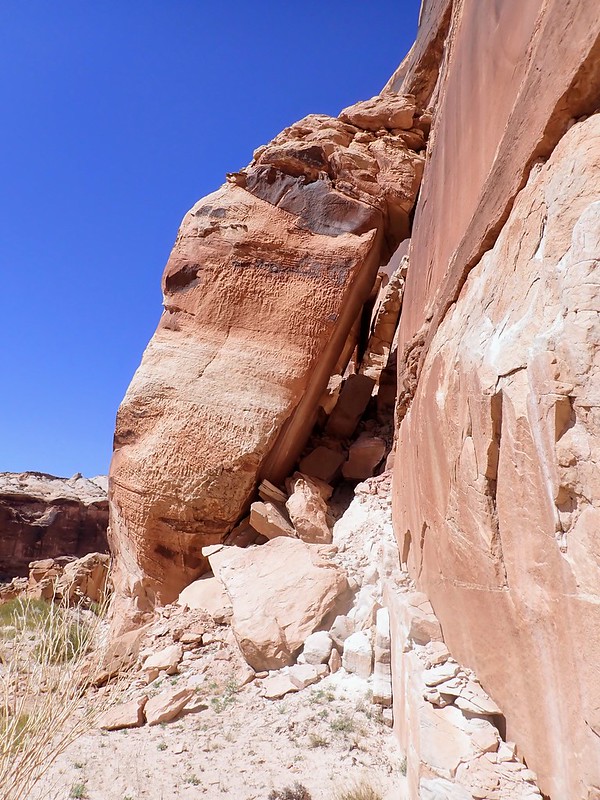
I hiked into Horseshoe Canyon with my friends Bill, Peter, and Kurt on 15 April 2023. We aimed to see the Barrier Canyon-style pictographs on the canyon walls. We arrived at the remote Horseshoe Canyon unit of Canyonlands National Park the night before. We were able to camp very near the trailhead.
A nice place to camp
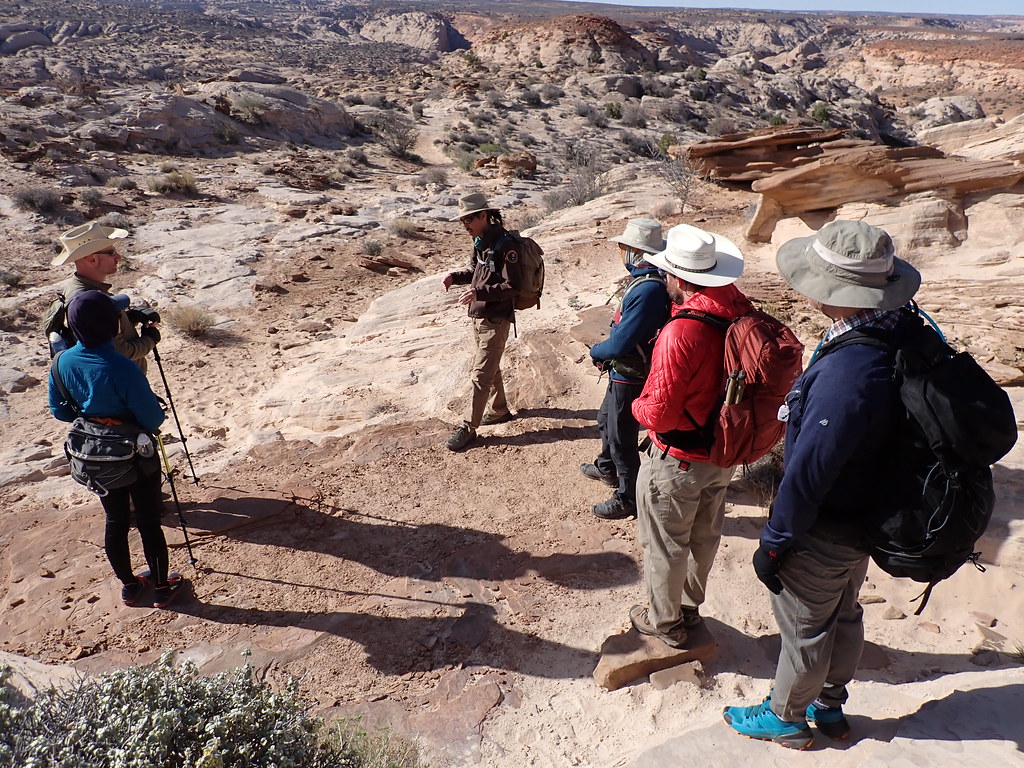
We met Ranger Jared at the trailhead for a guided walk. Bill had previously called and found there were ranger-guided tours; this was an excellent idea.
Ranger Jared
One of the first things Jared pointed out was a dinosaur track.
We descended about 150 meters (500 feet) into Horseshoe Canyon during the cool morning. The trail was well maintained; this is a moderate hike. One caution is that an early start would be wise in the summer months as hiking back up in the afternoon sun would be some hot work.
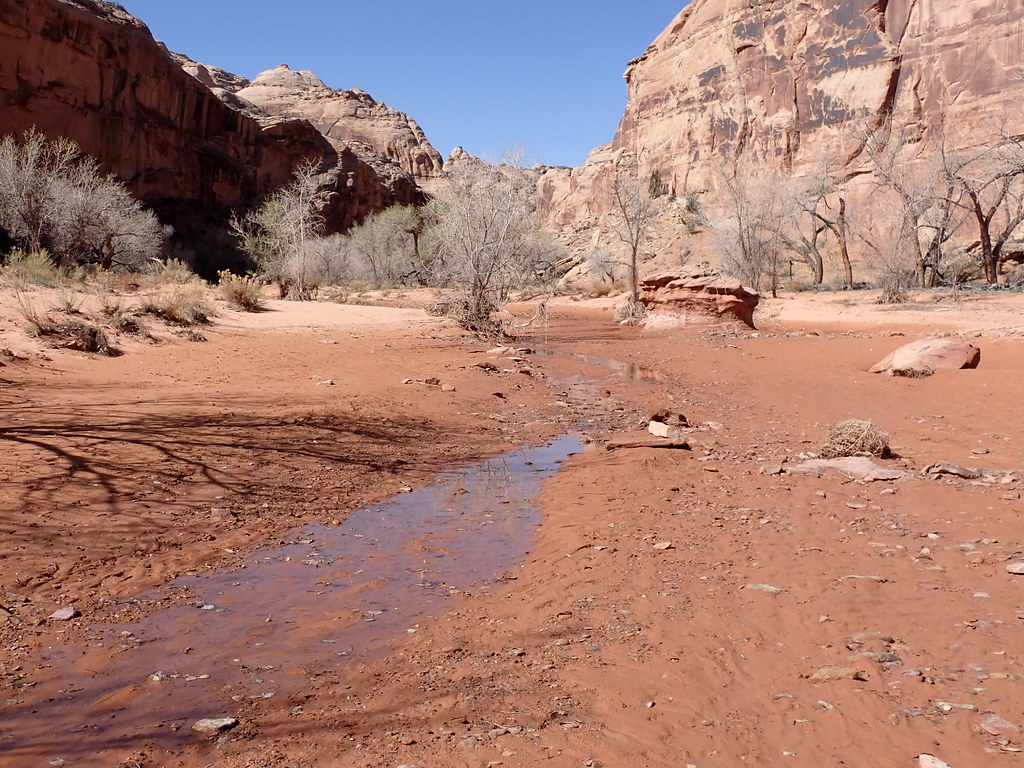
We crossed Barrier Creek several times
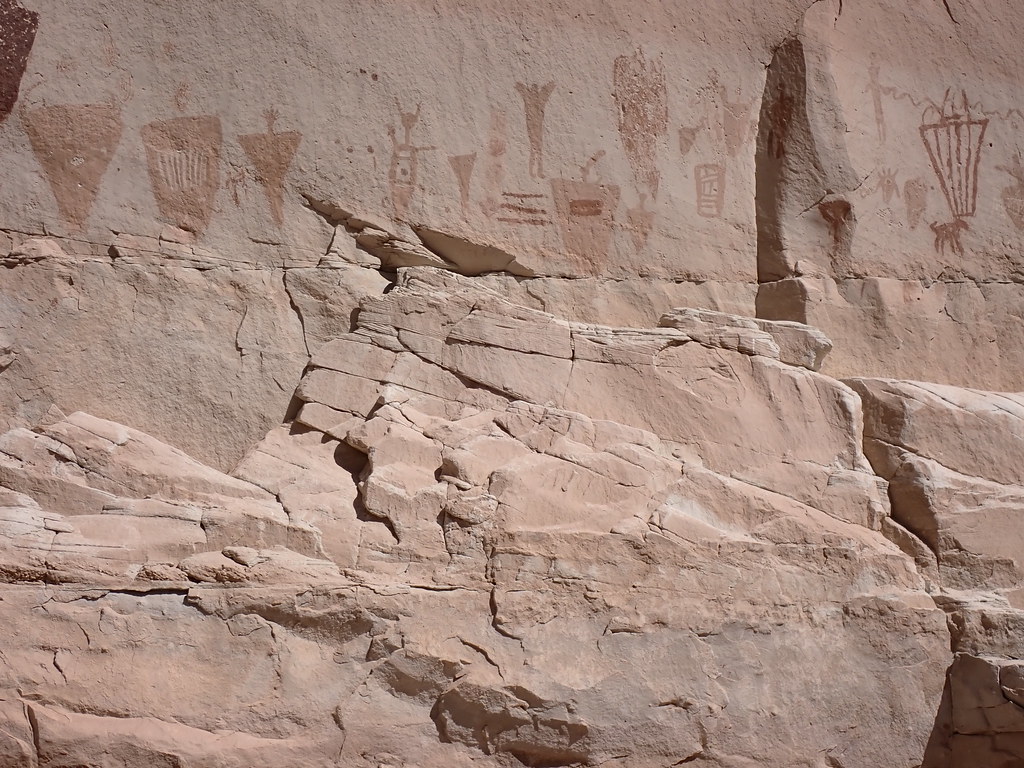
We saw four separate pictograph sites. First up was the High Panel, tucked into a small area among trees, a bit off the main trail. These pictographs were high off the ground. A short walk across the canyon, perhaps ten minutes, led to the Horseshoe Panel of pictographs was intriguing. I wondered what the artist meant to communicate with the trapezoidal figures in the panel. I had seen petroglyphs before, but this trip was my first exposure to pictographs; there was a lot to ponder.
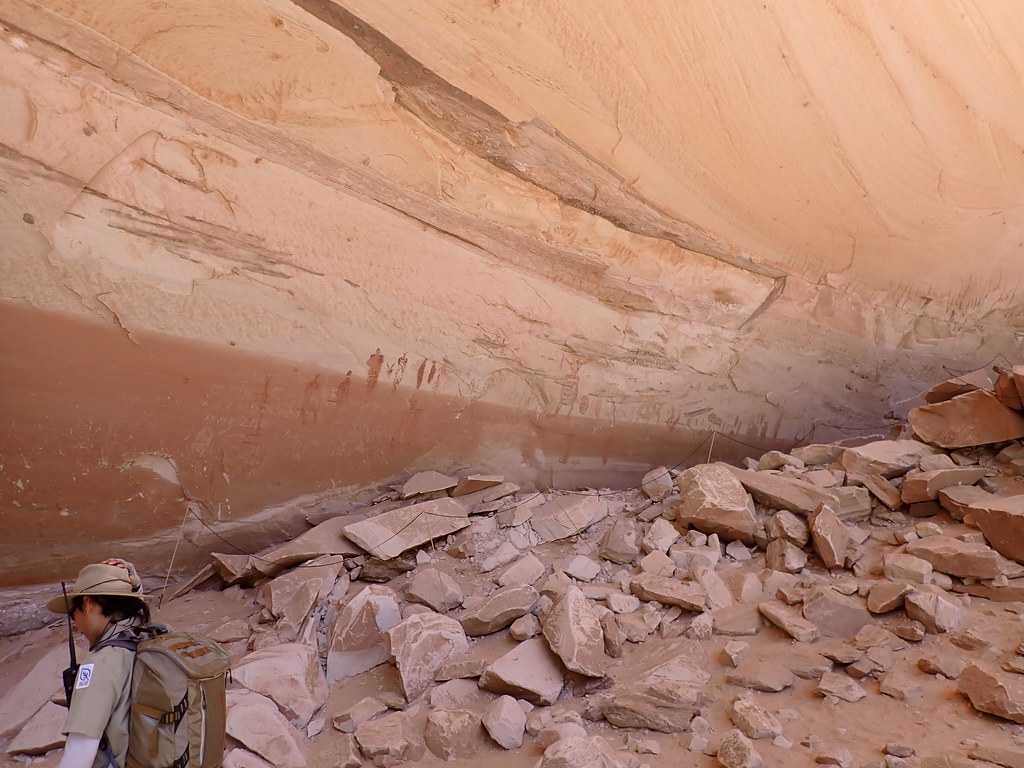
After some time at Horseshoe Panel, we headed to the Alcove Panel.
We noticed the acoustics were interesting; we wondered what ceremonies were associated with the pictographs. Some epic tales, the equal of the Iliad in the Western tradition, might have been told at these sites.
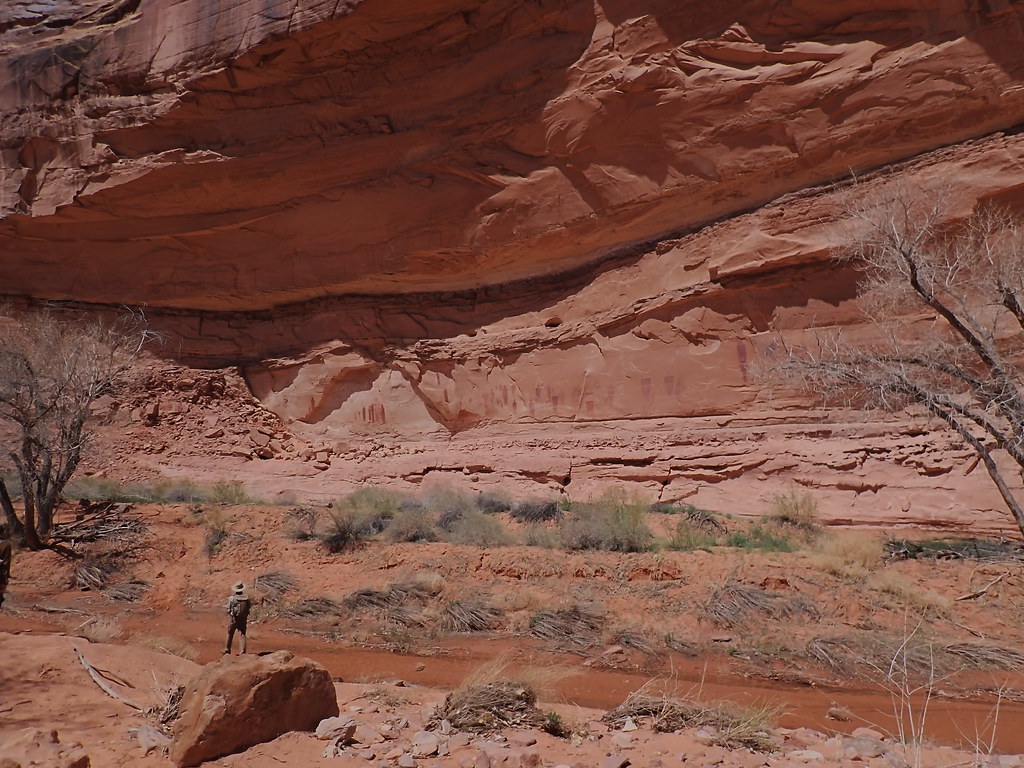
Next, our group trekked about a mile to the Great Gallery.
The approach opened up to the initial view of the Great Gallery.
The pictographs spread over a 20-meter (60-foot) expanse of rock tucked under the cliff; this was the most complex set I’d seen. There was a repeated motif of trapezoidal figures. In this gallery, some of the darker figures had lighter shadows next to them, perhaps like the soul of the darker figures. The panel had more miniature figures; I considered them humans among the gods.
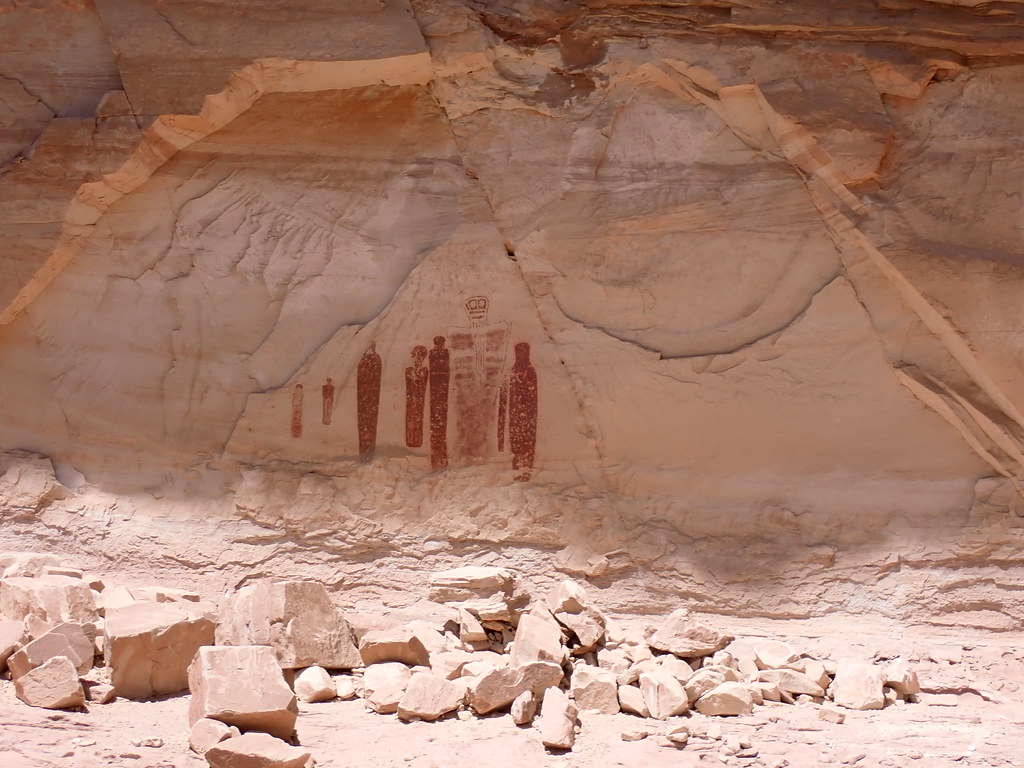
The mysterious “Holy Ghost” section left me wondering what it might mean.
We had lunch on some benches that let us gaze at the Great Gallery and contemplate this great art. Afterward, we wandered up the canyon toward our camp.
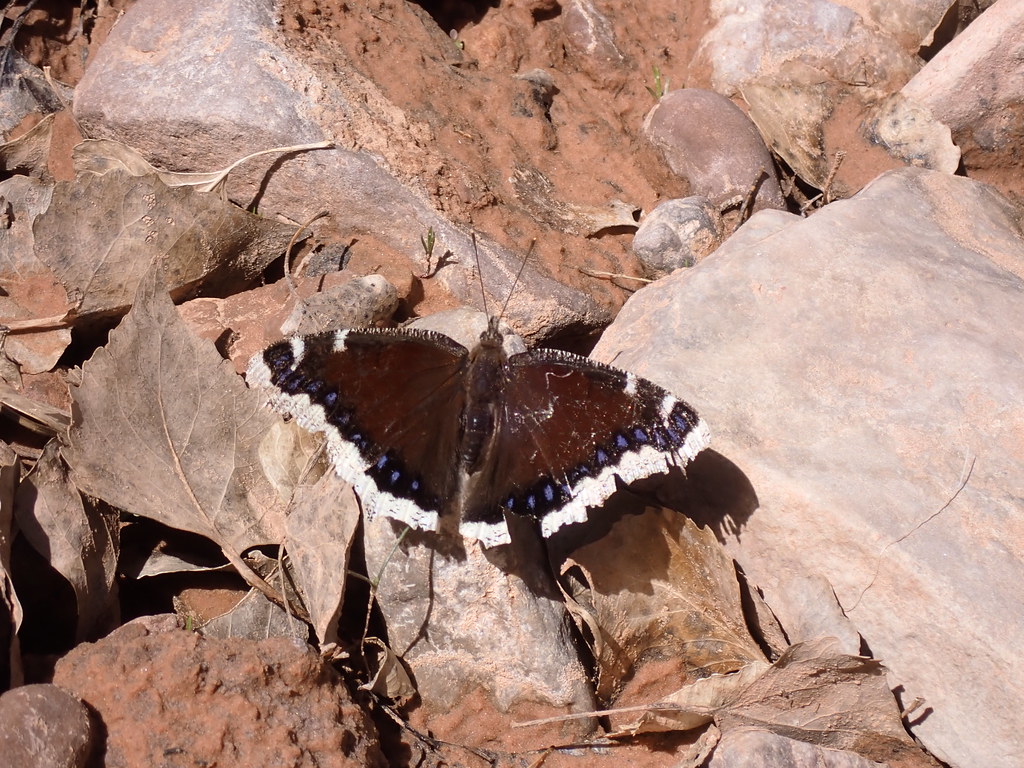
Along the way, I spotted a butterfly near Barrier Creek. I spent a good five minutes chasing it down.
It was a Mourning Cloak butterfly, a common species I had seen in my home state of Washington. When I posted this observation on iNaturalist, I found that Nymphalis antiopahas a wide range across the Northern Hemisphere. Whether common or rare, it was still worth chasing a butterfly.
While taking a break before ascending to camp, I talked to a couple who are volunteers at the park. They had seen an unusual wildflower, a paintbrush species, on the opposite rim of the canyon. They gave me directions, and I was off on a botanical boondoggle. The hiking up to the opposite rim was more challenging.
I decided to head along the trail on this side of the canyon for about 20 minutes; the payoff was a great view of Sugarloaf Butte with the Henry Mountains in the far distance.
We had brought radios, and I could contact my friends at our camp on the opposite rim. As I headed down, I had a great view of Horseshoe Canyon. After an hour, I returned to camp and settled in for dinner. It was a fine day of hiking. As a bonus, we had some excellent star gazing in the evening.
We started our longest hike today, close to 24 miles. It’s a fair distance, but Mike and I feel dialed in after doing 77 miles in the previous four days. The weather was cold and windy as we emerged. We set out from our hotel and placed our vehicles. Along the way, we picked up a thru-hiker from near Austin, Texas. He had spent a miserable night; his tent had nearly blown down. We got him into Julian and headed back to Scissors Crossing.
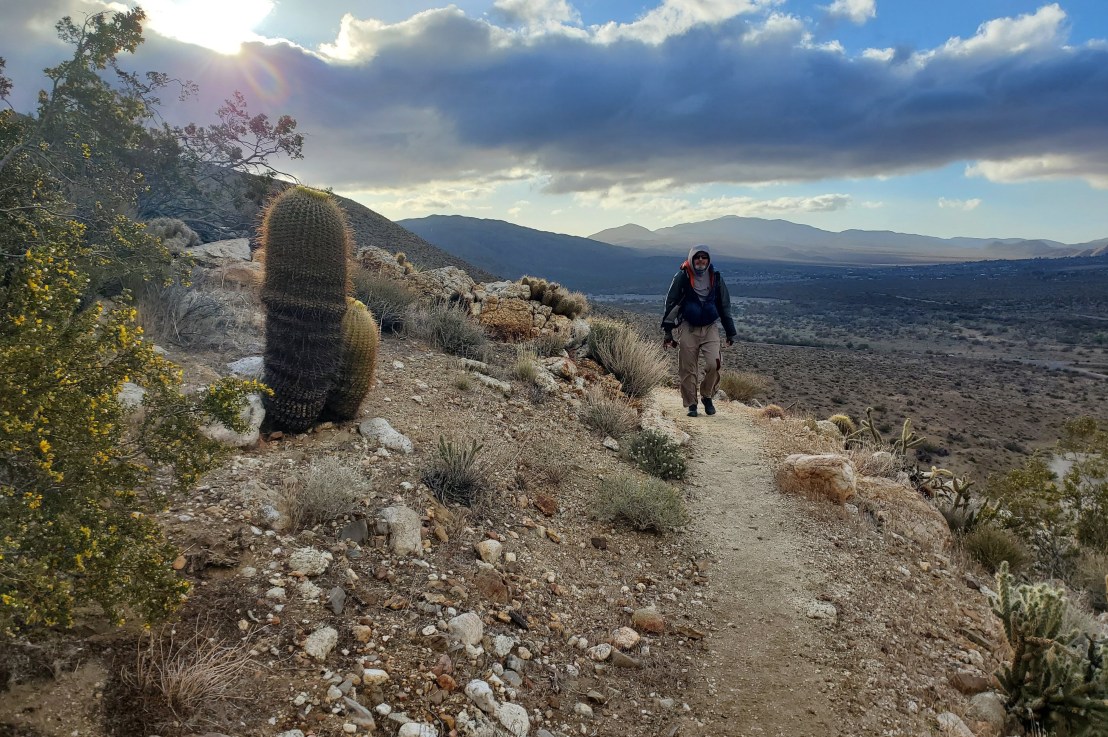
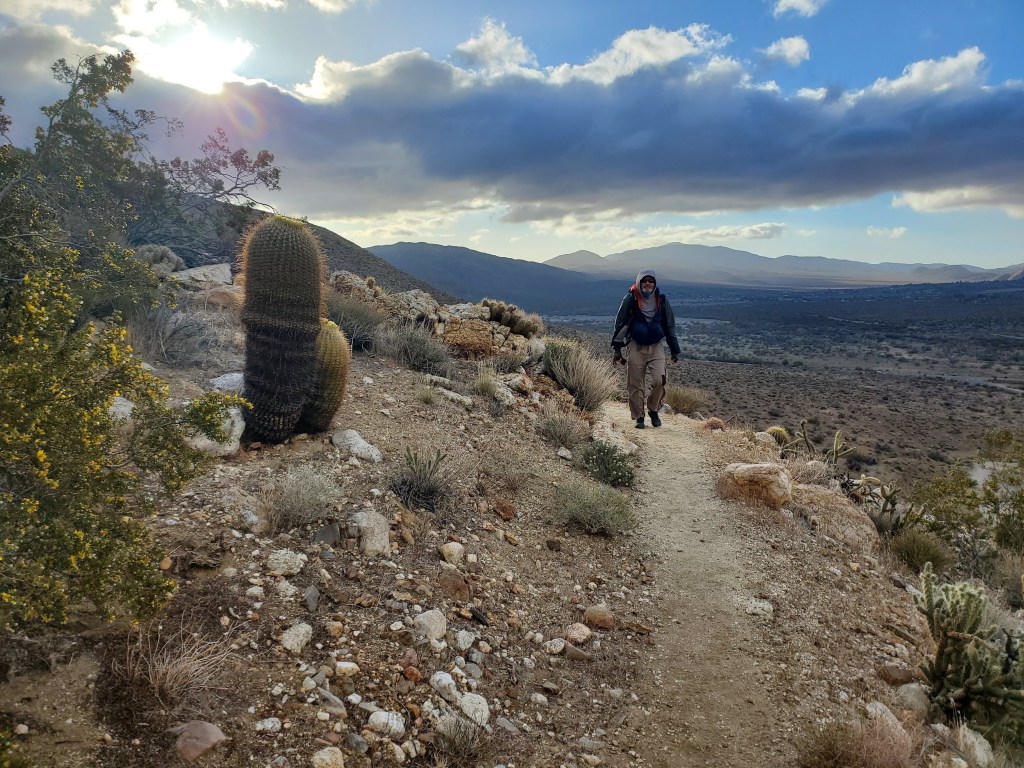
We launched out geared up for cold and windy conditions. The sky was gray as we climbed up the San Felipe Hills. The first mile is a bit steep but not too demanding. A rainbow makes the hiking pleasant; it persisted for the next 45 minutes. Our hiking is through the Anza-Borrego Desert State Park for the next ten miles.
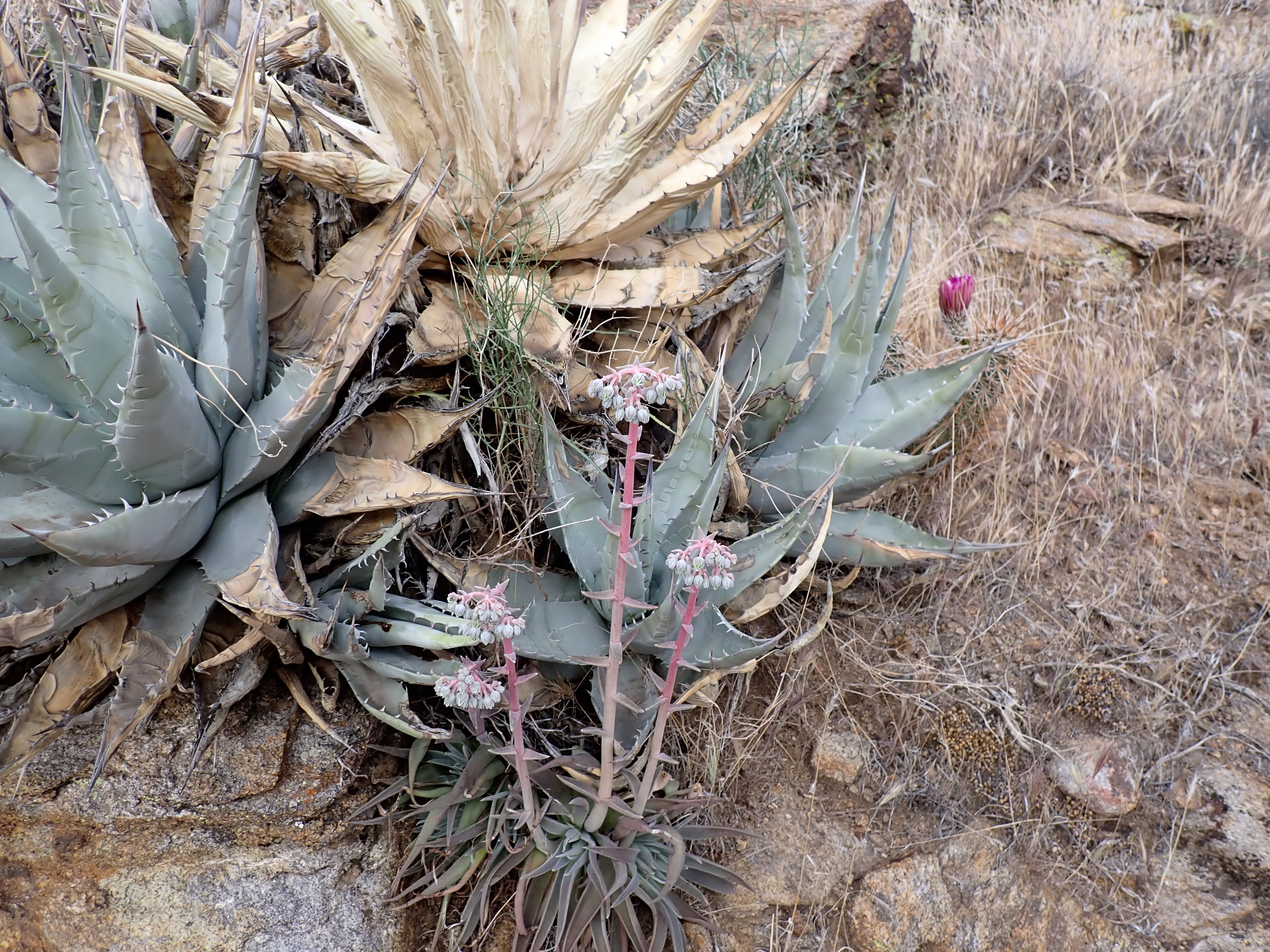
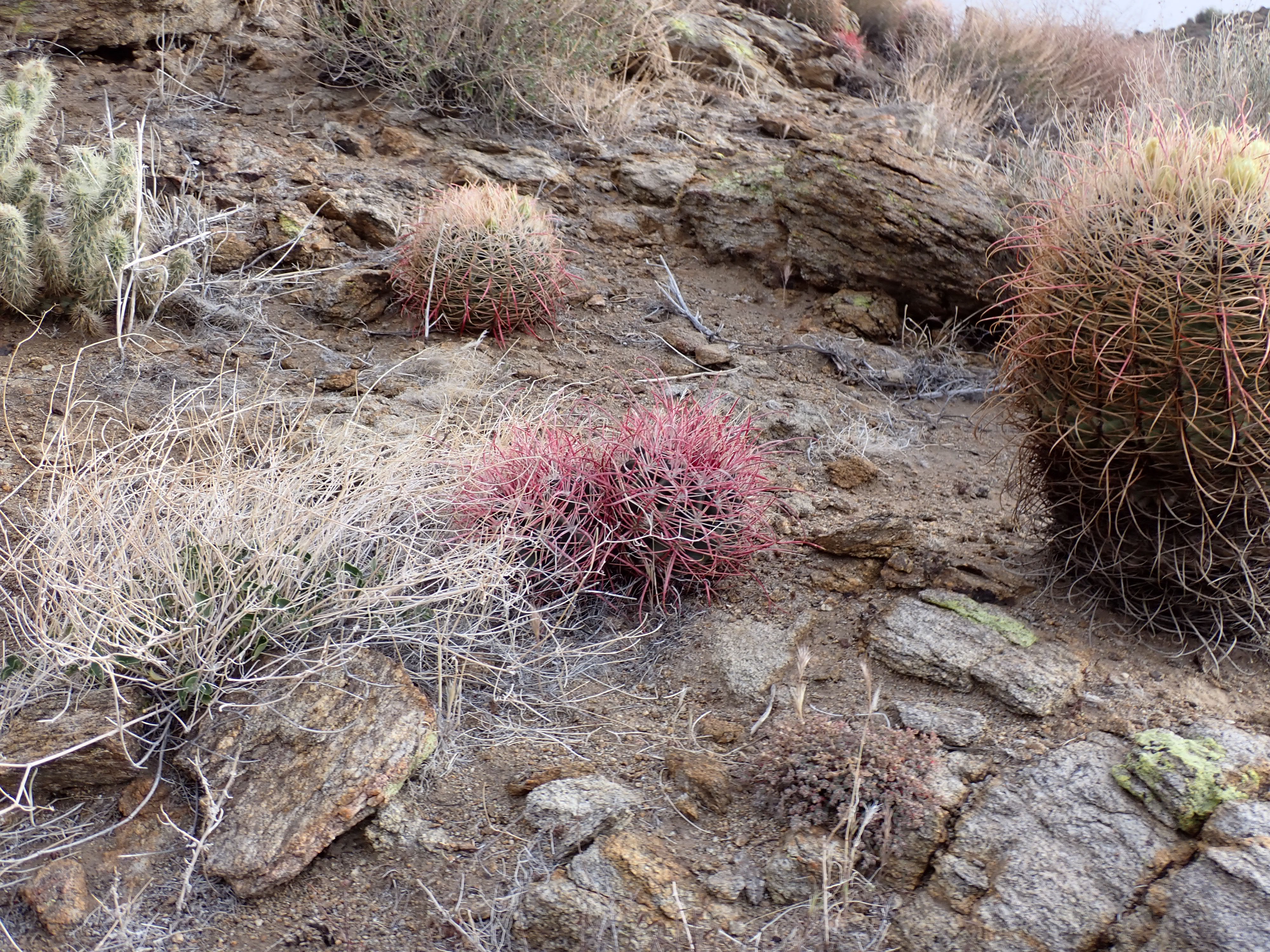
We head onward and upward through a desert garden. There are many cacti and other plants in bloom. It’s some beautiful botanizing, but we keep moving. It does take relentless forward progress to rack up 24 miles.
Botanical sauntering at its best
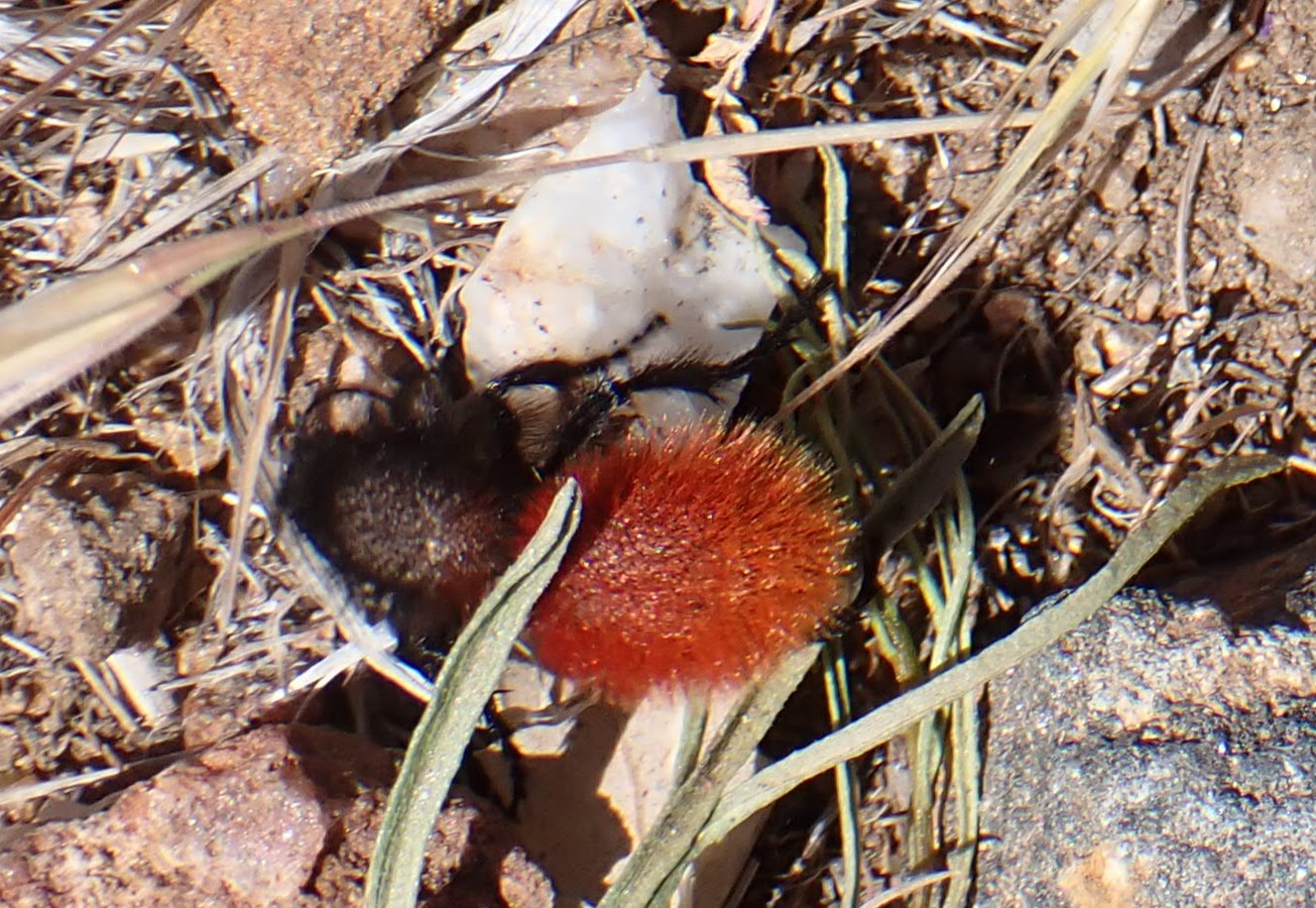
I notice a red, fuzzy insect, like a crawling bumblebee, as I’m sitting. It’s called a velvet ant, actually a parasitic wasp Genus Dasymutilla. I have observed a velvet ant only once before. Their bright color lets other animals know to avoid them; they have an excruciating sting. The sting of a velvet ant is classed as a 3 on the Schmidt sting pain index. Let me say that I decided it was a good time to stand up and shake out my pants and pack!
The rest of this hike was a bit of a blur. We went up for a while more. Next, we headed down for six or seven miles of afternoon hiking down a forested canyon. I was in the groove; I just put one foot in front of the other. Finished up at Barrel Springs, got our cars, and headed back to Julian for yet another delicious pizza and a good night’s rest. Tomorrow will be an easy day of about 8 miles into Warner Springs.
We set off from our base near Julian on a cold, clear morning. The temperature when we left was a brisk 27 degrees. We did our usual car shuttle machinations and launched from Sunrise Trailhead; bound for Scissors Crossing. As you can see, we are wearing warm clothes as we launched north.
We are hiking 18 miles today. The start and the end of the hike are within the boundaries of Anza-Borrego Desert State Park. In the middle section, we will be walking in an area controlled by the Bureau of Land Management. A quick tip to other hikers, to leave a car at Sunrise trailhead in the state park requires a day use fee. Fortunately, there was an app that let you pay online. Unfortunately, I had no cellphone service. Fortunately, Mike did have service and was able to get this taken care off.
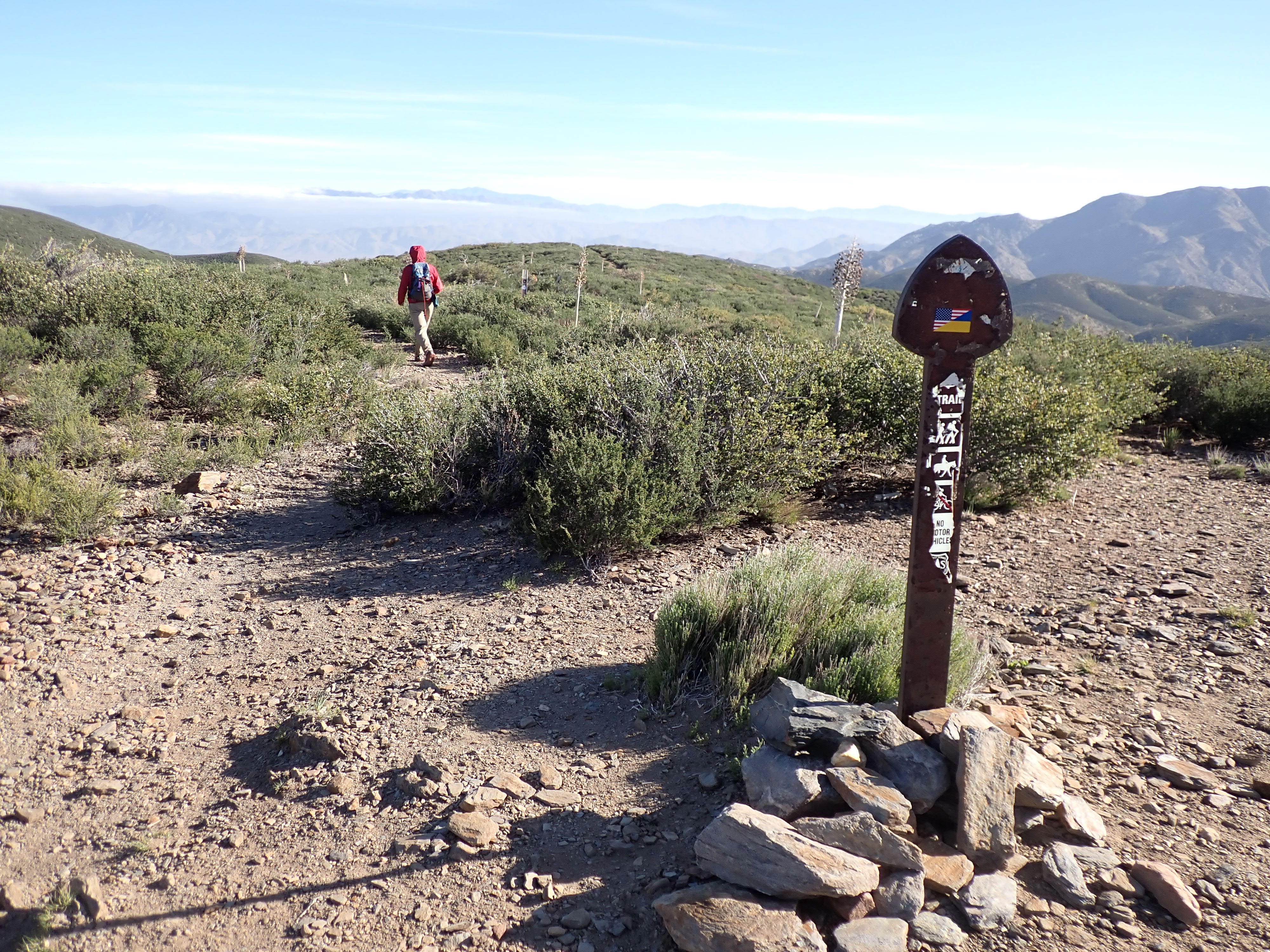
We saw some interesting plants as we made our way up the trail. The photos below show a plant that we became familiar with: Chaparral Yucca (Hesperoyucca whipplei). It throws up a tall flower stalk (the botanical term is a scape) and is covered with flowers. I added an observation of Chaparral Yucca on iNaturalist ; another naturalist confirmed my identification. I have oodles of nature photos to work through. My methodology is to first put them on iNaturalist and then (hopefully) write about the flora and fauna of this section of the PCT
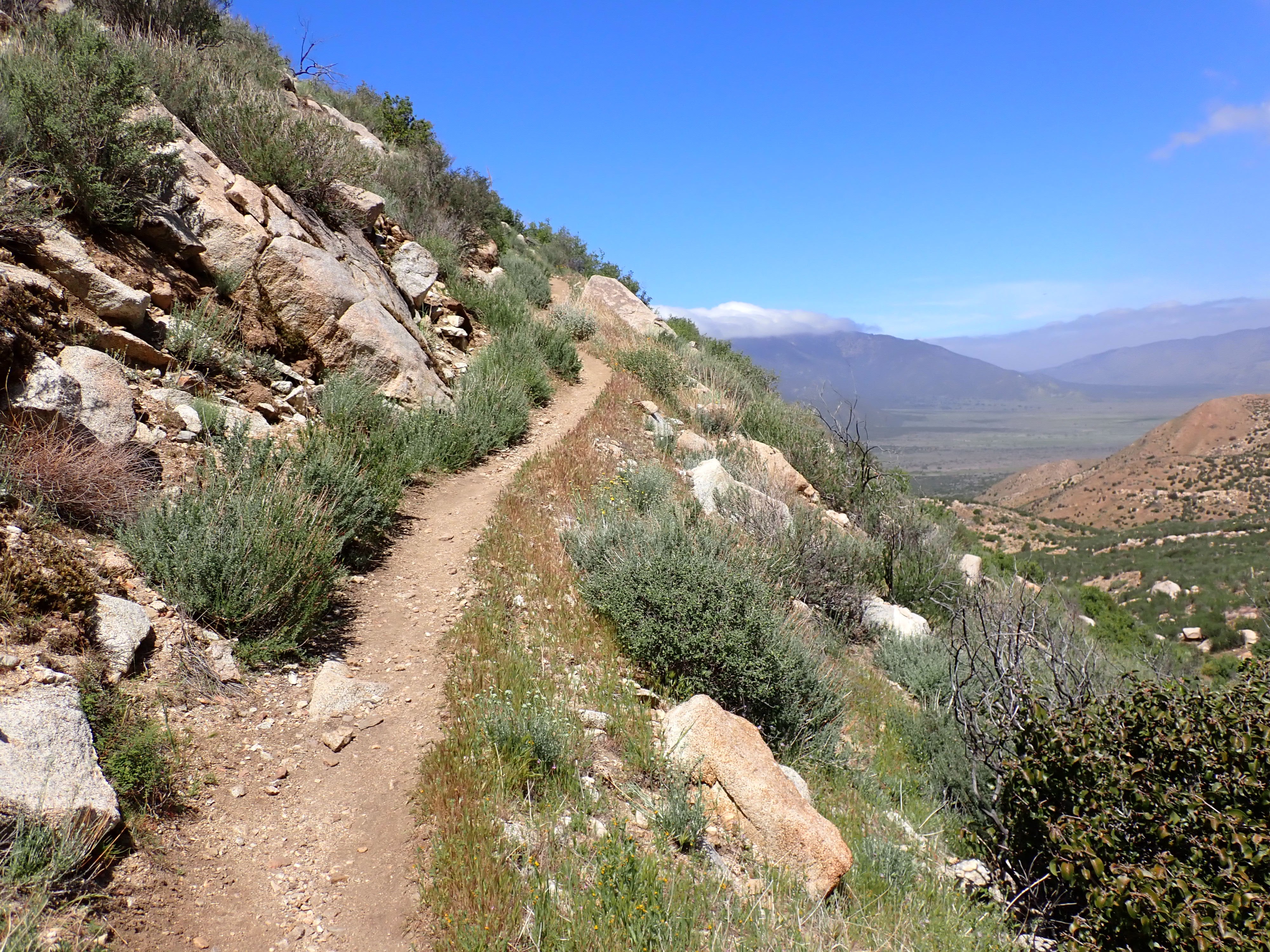
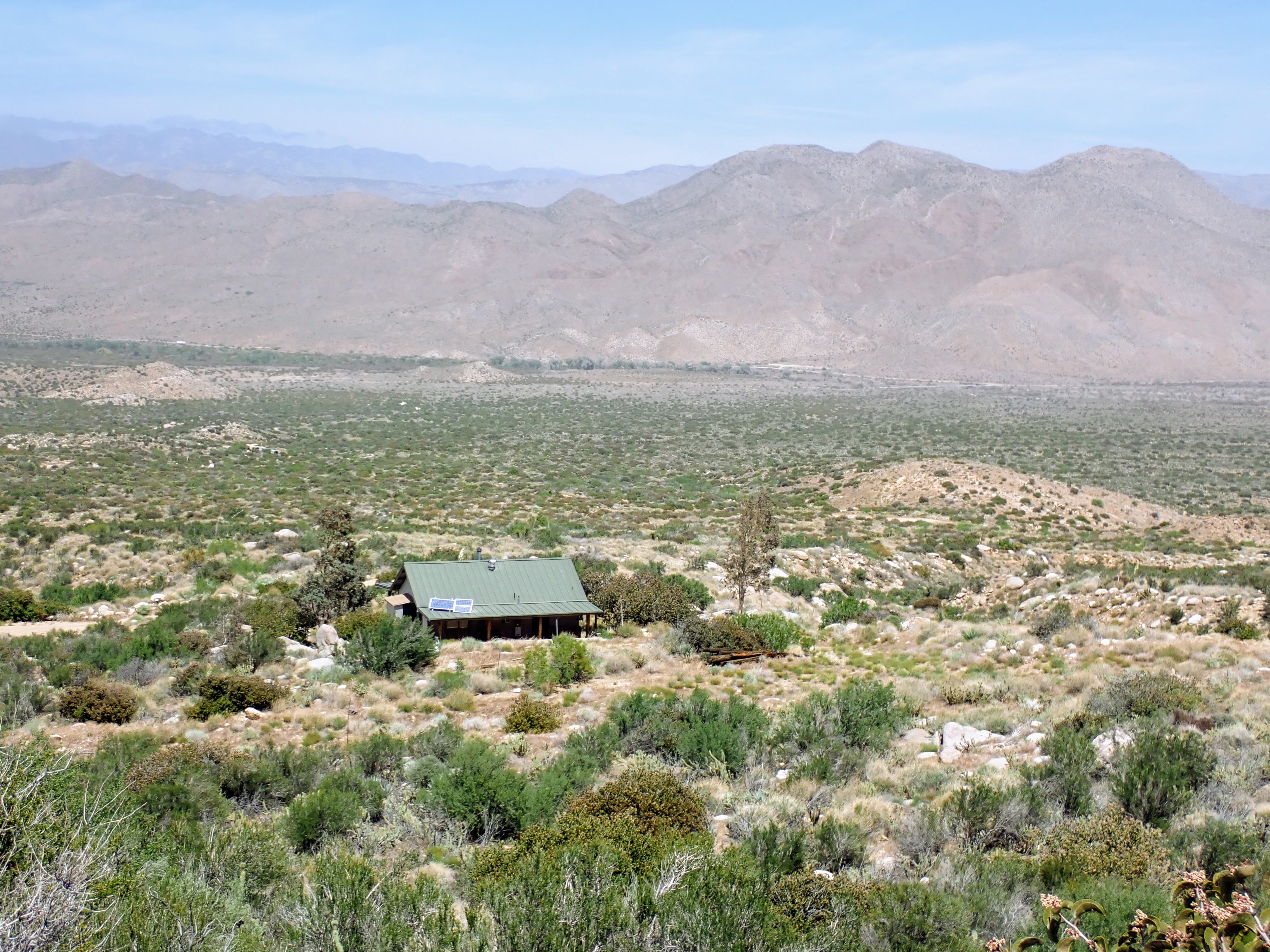
Well, back to hiking. The trail was more down than up today. As we pressed on, we crossed a few roads and encountered just a few other hikers; mainly thru hikers. We started to see signs of civilization; the middle photo below shows a homestead. The mountains beyond are the San Felipe Hills, we were to know them much better tomorrow, We were heading into the valley, our car was near the base of the hills.
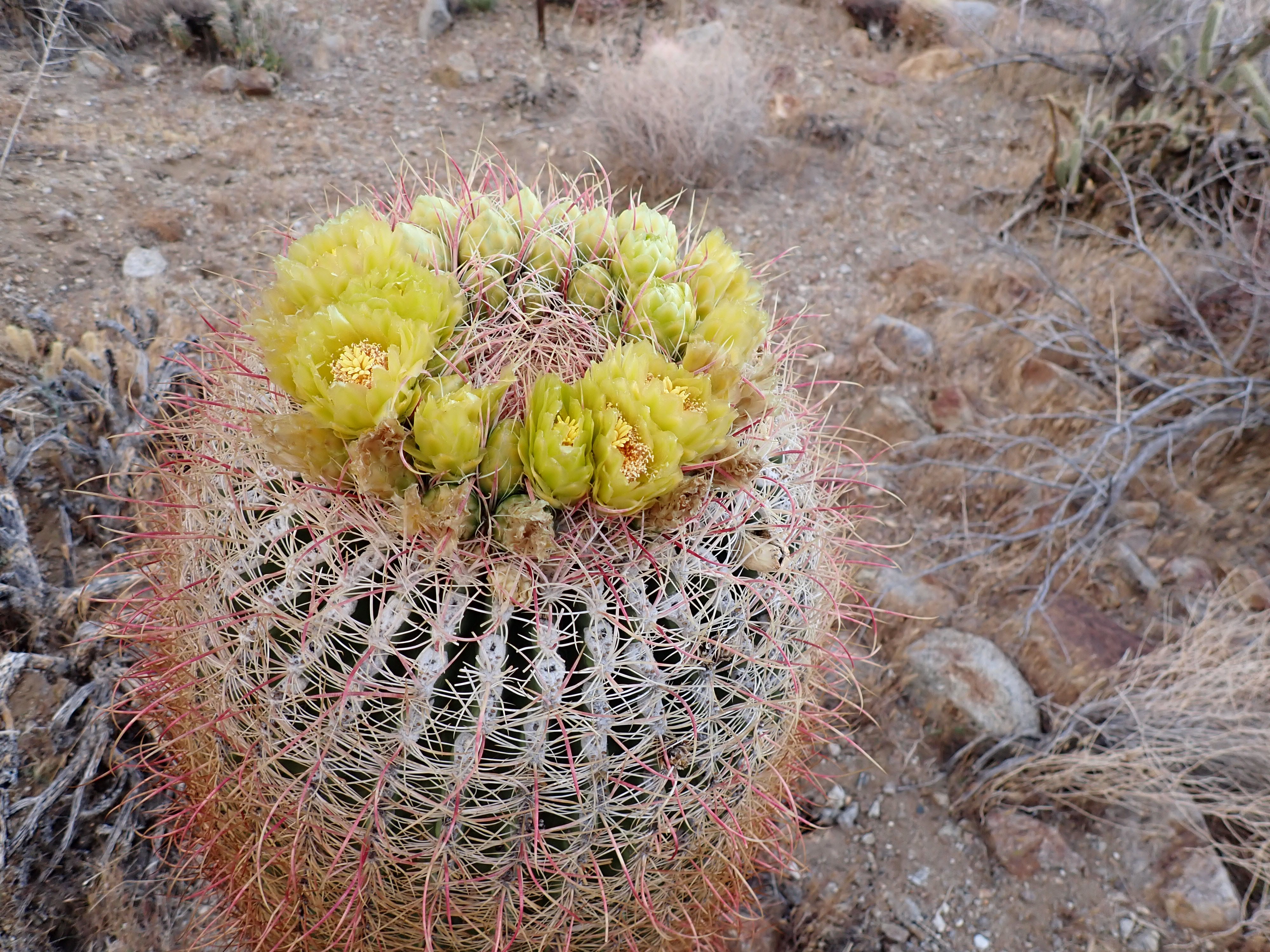
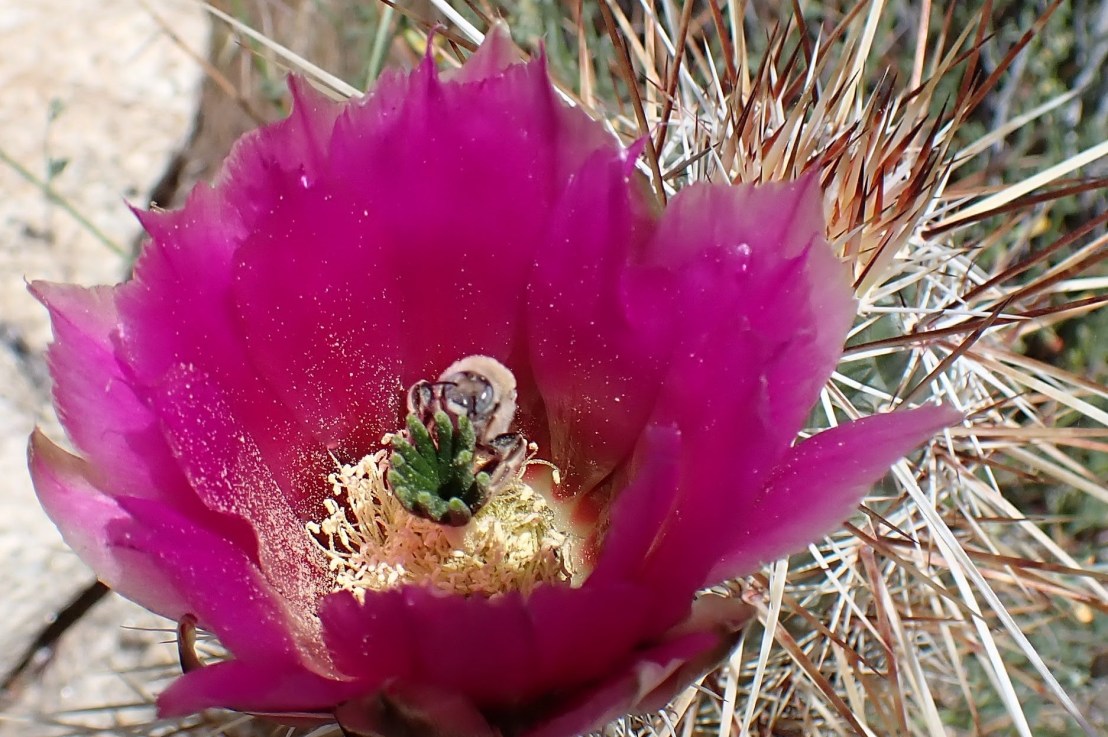
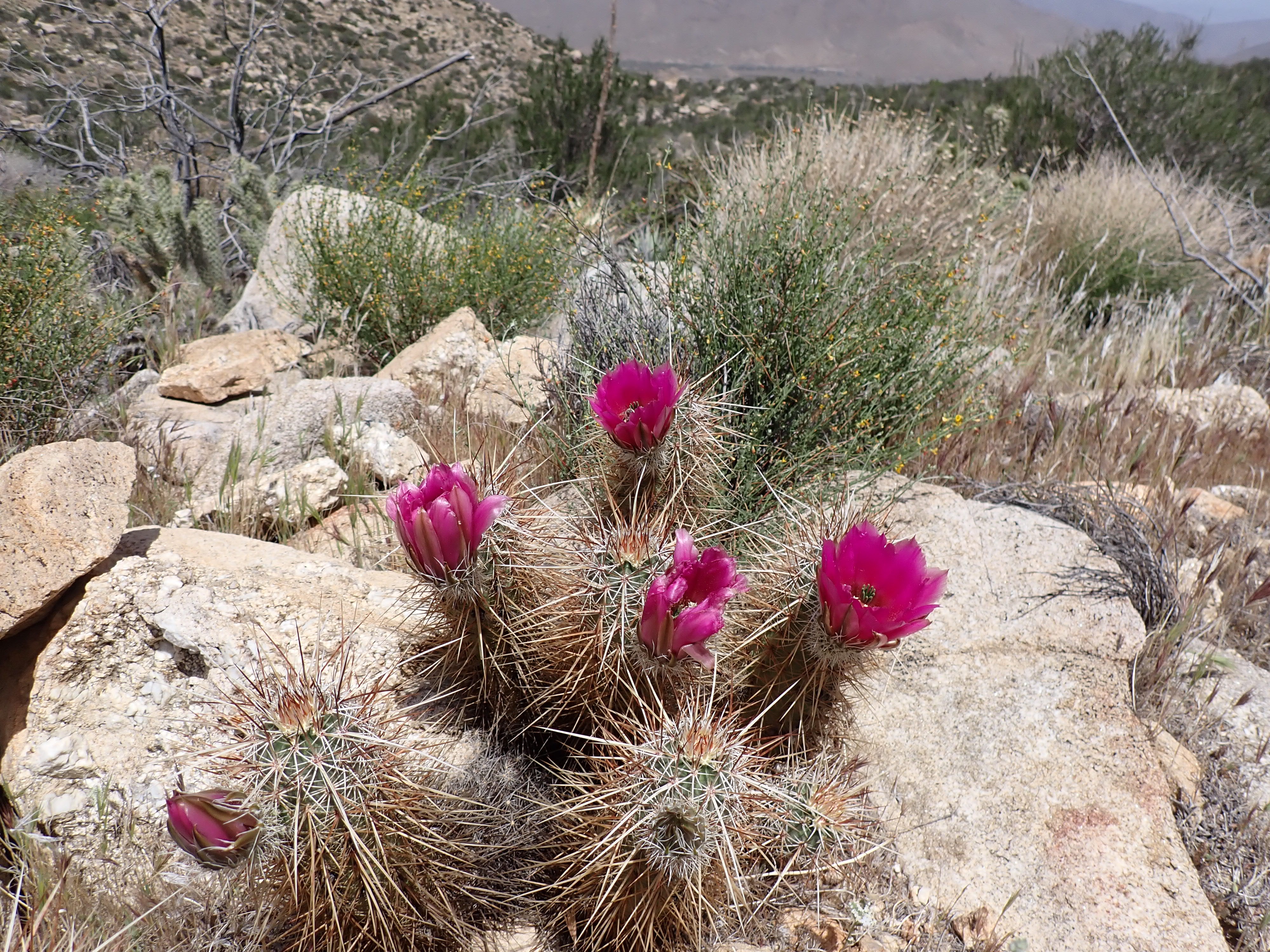
I’m still learning about the ecology of the area but my guess is that we transitioned from chaparral to desert at some point. One delight was seeing the cactus start to bloom. My favorite cactus of the day was flowering Engelmann’s Hedgehog Cactus (Echinocereus engelmannii) The photo’s show one example, look closely at the flower and you’ll see a bee working the bloom over. There’s pollen scattered around the flower; it was good to see a pollinator at work.
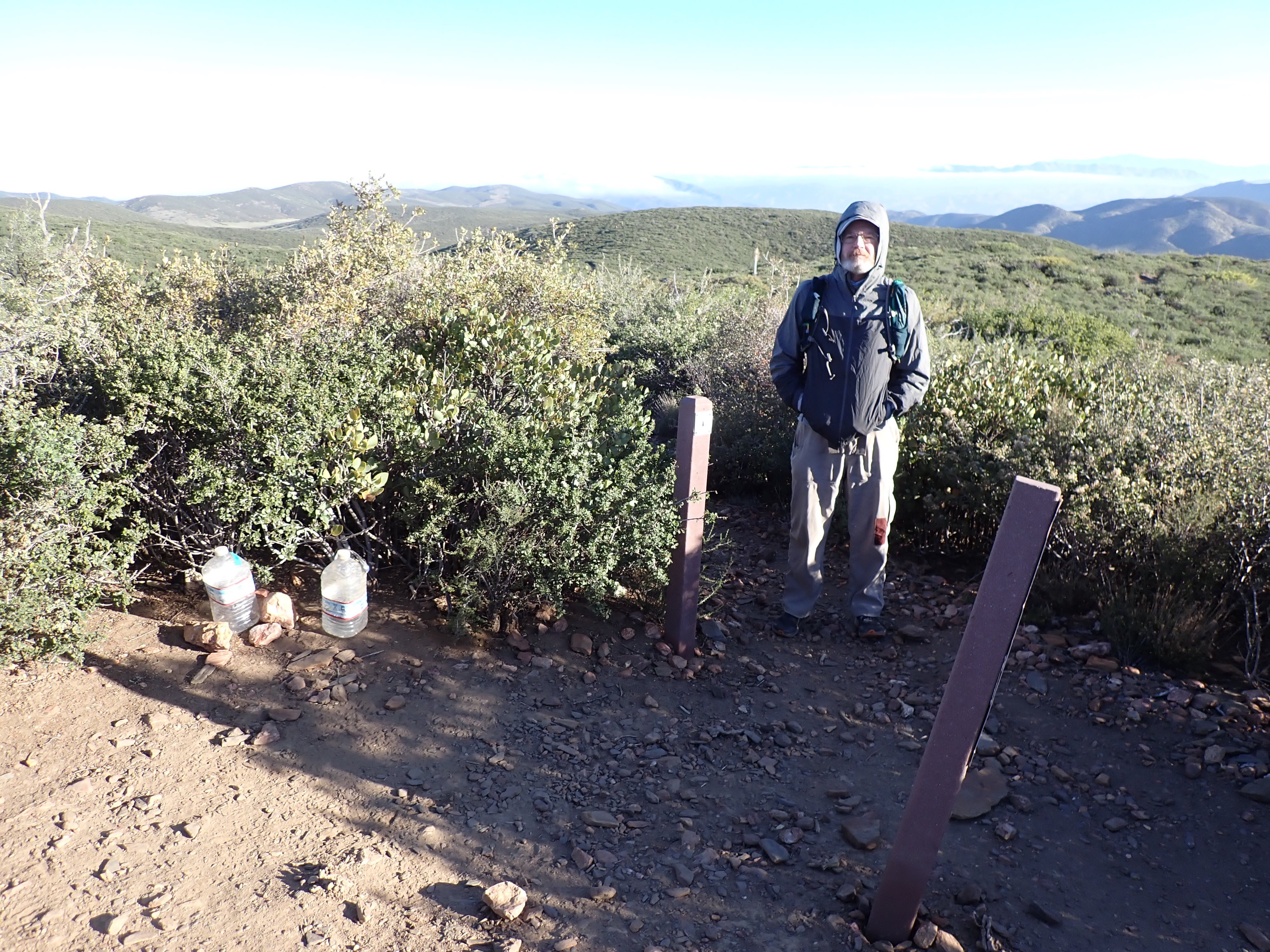
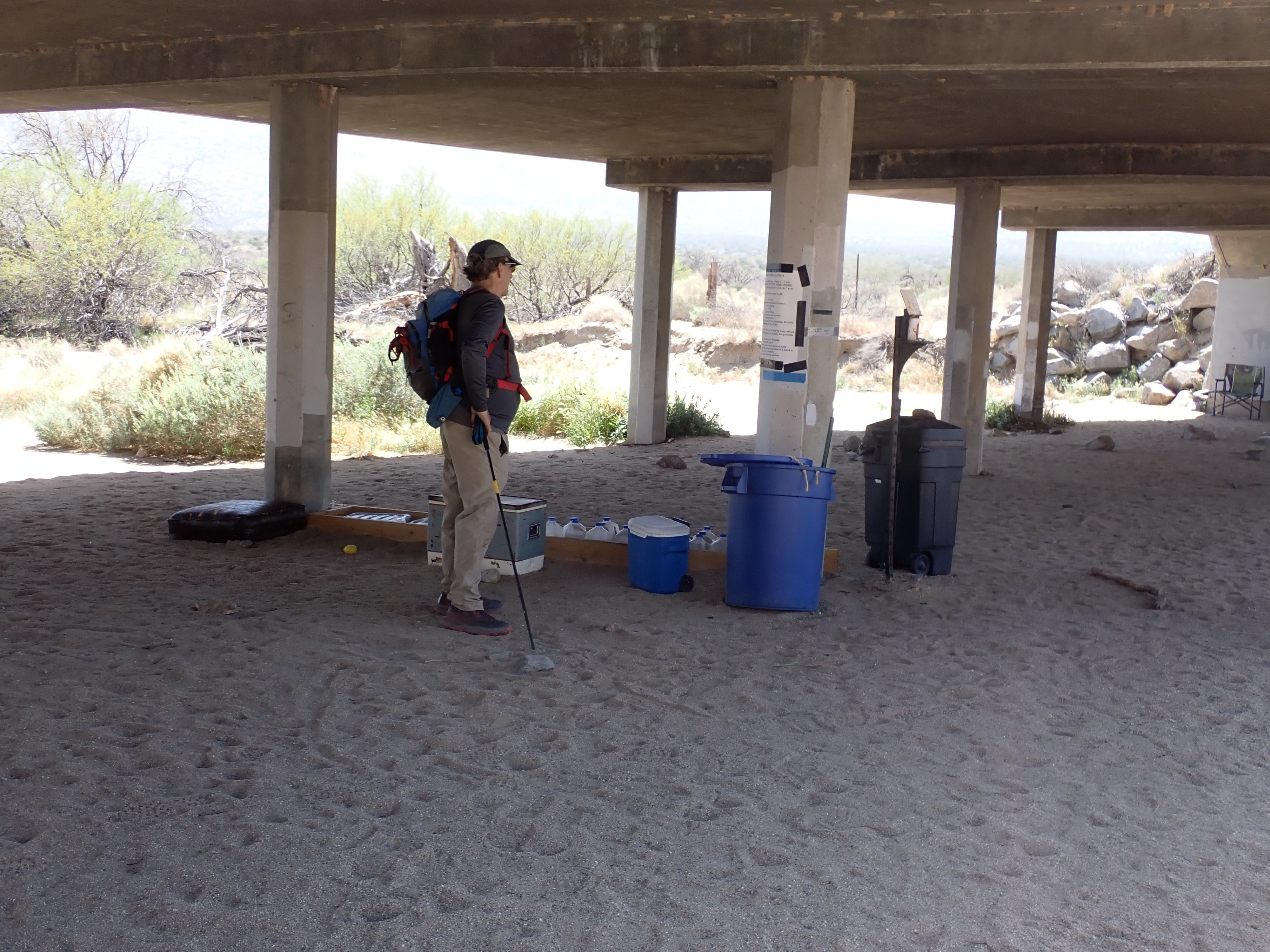
I had an internal transition; from feeling decent to quite nauseous. I’m sure that my churning guts didn’t improve my personality. I let Mike know and he paced me out. (Mike – thanks for putting up with me) When we got to Julian, I bought a six pack of diet ginger ale. I had one and felt better. A bit later I drank another. The next morning I still wasn’t 100%. Mike had great advice, bring ginger ale along in my pack. That was sage advice, it helped get my guts settled. On the way out, at Scissors Crossing, we investigated the water cache, It was large and well-organized. (We had seen an unmaintained water cache the previous day; the insects and other small critters would have made for an interesting nature study).
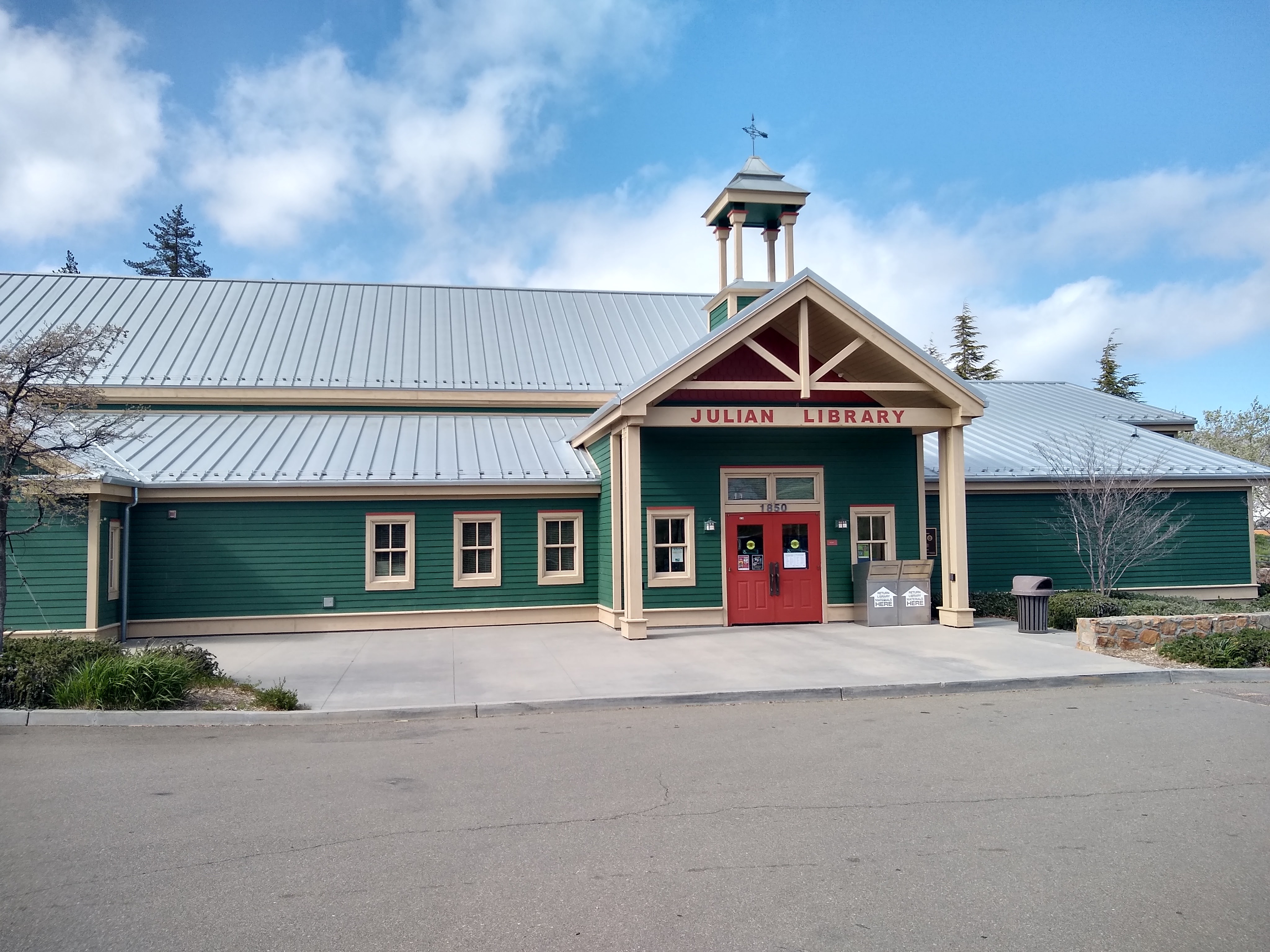
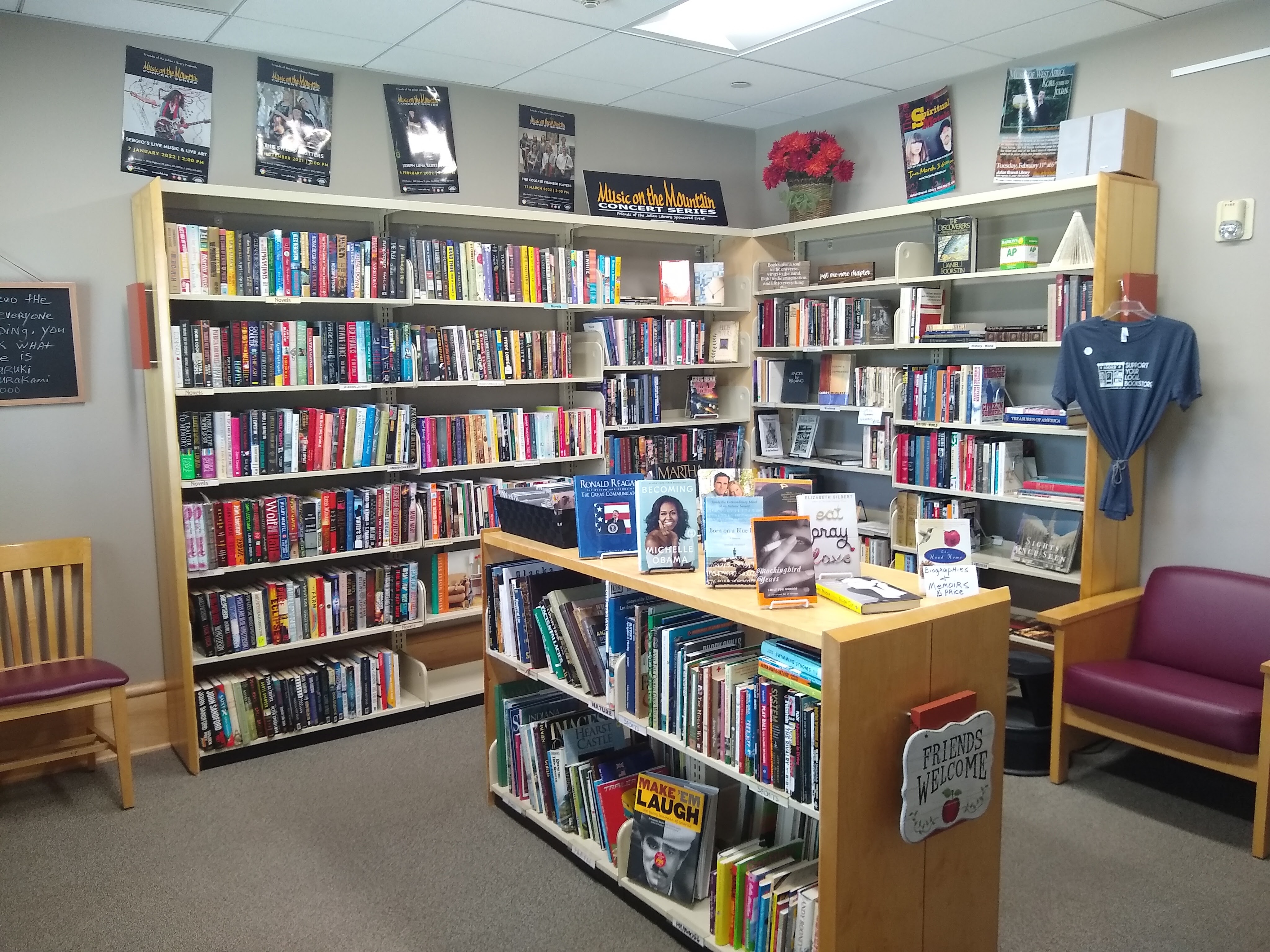
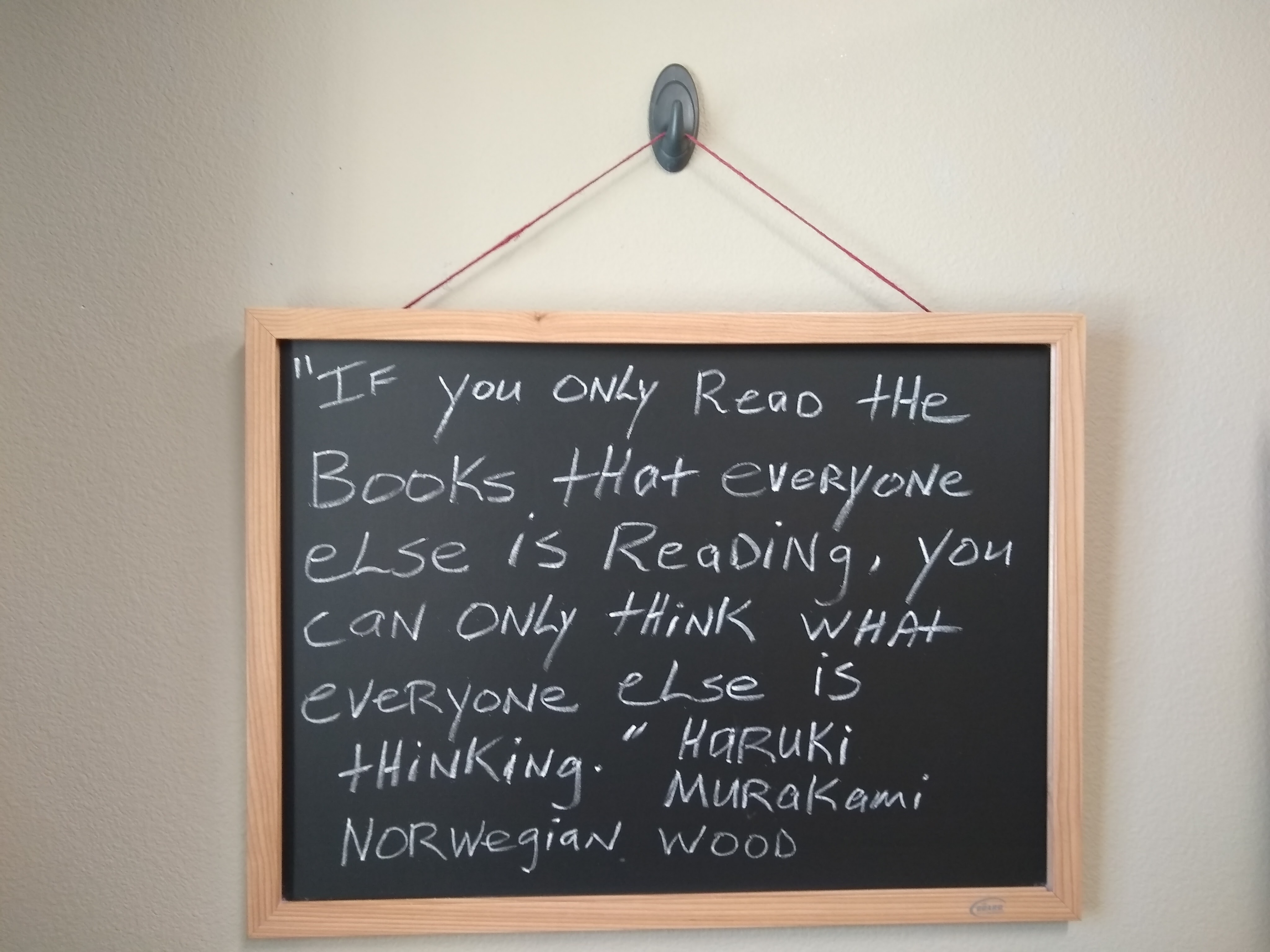
After getting to town and obtaining ginger ale, I spotted the Julian library. Those who know me can guess that I had to pay a visit; I am active with two Friends of the Library groups in Lake Forest Park, WA and Shoreline, WA. The Friends of the Julian Library had an entire room of books for sale. Yes, a few books went home with me. I had a great time chatting with Caroline about books and hiking.
After that, pizza and salad, shower, gear check for tomorrow’s long day and sleep.
















 brewbooks